morning stretch routine pdf

Morning stretch routines are gaining popularity, with numerous PDF guides available to help individuals incorporate simple, effective stretches into their daily lives.
What is a Morning Stretch Routine?
A morning stretch routine is a sequence of exercises performed immediately after waking up, designed to gently awaken the body and prepare it for the day ahead. Many resources, including readily available morning stretch routine PDF guides, offer structured programs; These PDFs often detail simple stretches that can be done in bed, minimizing the need for extensive space or equipment.
The core idea is to improve flexibility, reduce muscle stiffness, and enhance blood circulation. Utilizing a PDF allows for easy reference and consistent practice, ensuring a beneficial start to your day. These routines typically take between 5-10 minutes to complete.
Benefits of Starting Your Day with Stretching
Beginning your day with stretching, often guided by a convenient morning stretch routine PDF, offers a multitude of advantages. These PDF resources highlight benefits like increased energy levels, improved mood, and reduced stress. Consistent stretching enhances blood circulation, combating morning stiffness and promoting alertness.
Furthermore, a PDF-guided routine can aid in preventing injuries and improving posture. Many PDFs cater to specific needs, such as routines for women over 50, ensuring safe and effective practice. Ultimately, incorporating stretching into your morning fosters overall well-being.

The Physical Benefits of Morning Stretching
A morning stretch routine, often found in PDF format, demonstrably improves flexibility, range of motion, and reduces muscle tension for a revitalized body.
Improved Flexibility and Range of Motion
Utilizing a morning stretch routine, frequently detailed in accessible PDF guides, significantly enhances your body’s flexibility. Consistent stretching gently lengthens muscles and increases the range of motion in your joints. This is particularly beneficial after periods of inactivity, like sleep, combating stiffness.
A PDF routine often includes dynamic stretches, preparing muscles for daily activities. Improved flexibility not only eases movement but also reduces the risk of injuries during exercise or everyday tasks. Regularly following a morning stretching PDF can lead to noticeable improvements in physical performance and overall comfort.
Reduced Muscle Tension and Stiffness
Many morning stretch routines, conveniently outlined in PDF formats, are designed to alleviate muscle tension and stiffness accumulated overnight. These routines focus on gently releasing contracted muscles, promoting relaxation and improved circulation. A well-structured PDF guide will demonstrate stretches targeting common areas of tension, like the neck, shoulders, and back.
By incorporating these stretches, you can minimize discomfort and improve posture throughout the day. Consistent use of a morning stretching PDF helps break down adhesions and restore optimal muscle length, leading to a more comfortable and pain-free experience.
Enhanced Blood Circulation
A key benefit detailed in many morning stretch routine PDF guides is enhanced blood circulation. Stretching encourages blood flow to muscles and tissues, delivering vital oxygen and nutrients. This increased circulation helps to wake up the body and prepare it for the day’s activities, reducing feelings of sluggishness.
PDF resources often highlight dynamic stretches – movements performed with controlled repetitions – as particularly effective for boosting circulation. Regularly following a morning stretching PDF can contribute to improved cardiovascular health and overall vitality, promoting a feeling of energy and well-being.

The Mental and Emotional Benefits
Many morning stretch routine PDFs emphasize that stretching reduces stress, increases alertness, and improves mood, setting a positive tone for the day.
Stress Reduction and Relaxation
Numerous morning stretch routine PDFs highlight the powerful connection between physical movement and mental wellbeing. Gentle stretching encourages the release of tension held within the muscles, directly contributing to a sense of calm and relaxation. This is particularly beneficial first thing in the morning, as it helps to counteract the cortisol surge often experienced upon waking.
By focusing on breathwork alongside stretches – a common element in many PDF guides – individuals can further activate the parasympathetic nervous system, promoting a state of rest and reducing feelings of anxiety. Consistent practice, as outlined in these resources, can lead to a noticeable decrease in overall stress levels throughout the day.
Increased Energy Levels and Alertness
Many morning stretch routine PDFs emphasize that stretching isn’t just about flexibility; it’s a potent energy booster. Gentle movements increase blood flow throughout the body, delivering vital oxygen to muscles and organs, including the brain. This enhanced circulation combats morning sluggishness and promotes a feeling of wakefulness.
These PDF guides often suggest incorporating dynamic stretches – controlled movements through a range of motion – to further stimulate the nervous system and elevate alertness. Starting the day with a stretch routine, as detailed in these resources, can provide a sustained energy lift, reducing reliance on caffeine or other stimulants.
Improved Mood and Focus
Morning stretch routine PDFs frequently highlight the connection between physical movement and mental wellbeing. Stretching releases endorphins, natural mood elevators that can combat feelings of stress and anxiety. A consistent routine, as outlined in these guides, can contribute to a more positive outlook throughout the day.
Furthermore, the mindful focus required during stretching promotes present moment awareness, helping to quiet a racing mind. Many PDFs suggest pairing stretches with deep breathing exercises to amplify these benefits, enhancing concentration and improving cognitive function for increased focus.
A 10-Minute Morning Stretch Routine
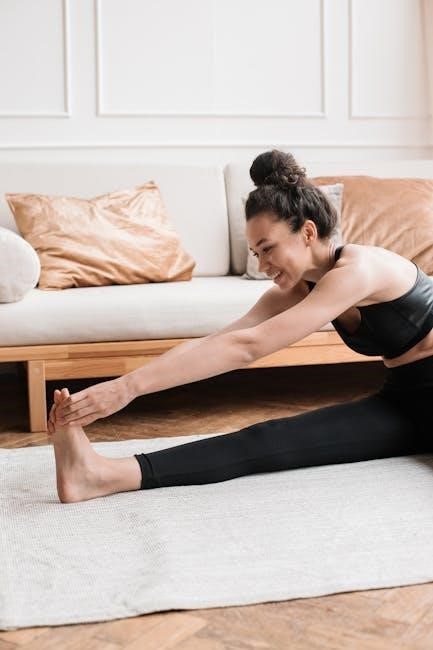
Many morning stretch routine PDFs offer quick, accessible sequences, like a 10-minute plan, easily integrated into busy schedules for daily wellness.
In-Bed Stretches (First 5 Minutes)
Numerous morning stretch routine PDFs emphasize starting gently, directly in bed. These initial five minutes focus on easing the body awake without strain. Common exercises detailed in these guides include the knee-to-chest stretch, promoting lower back relief, and gentle spinal twists to improve mobility.
Modified cat-cow stretches, performed lying down, are frequently recommended for spinal articulation. Simple ankle rotations and foot flexes enhance circulation, while gentle neck rolls release tension. These in-bed stretches, often visually demonstrated within the PDFs, prepare the body for more dynamic movements, establishing a foundation for a productive day.
Knee-to-Chest Stretch
Many morning stretch routine PDFs highlight the knee-to-chest stretch as a foundational exercise. Performed lying on your back, it involves gently drawing one or both knees towards your chest. These guides often illustrate holding the stretch for 20-30 seconds, focusing on deep, controlled breaths.
The PDFs explain this stretch effectively targets the lower back muscles, relieving tension and promoting flexibility. Modifications are frequently included for beginners, suggesting using a towel to assist if reaching the knees is difficult. Consistent practice, as detailed in these resources, can significantly improve spinal mobility and reduce discomfort.
Spinal Twist
Morning stretch routine PDFs commonly feature the spinal twist as a key component for enhancing flexibility and relieving back pain. Typically performed lying on your back with knees bent, the exercise involves gently rotating your knees to one side while keeping your shoulders flat on the floor.
These guides emphasize maintaining a comfortable range of motion and holding the twist for 20-30 seconds, breathing deeply. Variations are often presented, including using a pillow under the knees for support. PDFs highlight the benefits of improved spinal mobility and detoxification through gentle compression.
Cat-Cow Stretch (Modified for Bed)
Many morning stretch routine PDFs adapt the classic Cat-Cow stretch for comfortable execution in bed. This involves gently arching your back upwards like a cat (Cat pose) and then dropping your belly towards the mattress, lifting your chest (Cow pose), all while remaining on your hands and knees – or a modified version lying supine.
PDF guides stress coordinating movement with breath, inhaling during Cow pose and exhaling during Cat pose. This gentle flow improves spinal flexibility and promotes relaxation. Modifications often include smaller movements for beginners, ensuring a pain-free experience.
Ankle Rotations and Foot Flexes
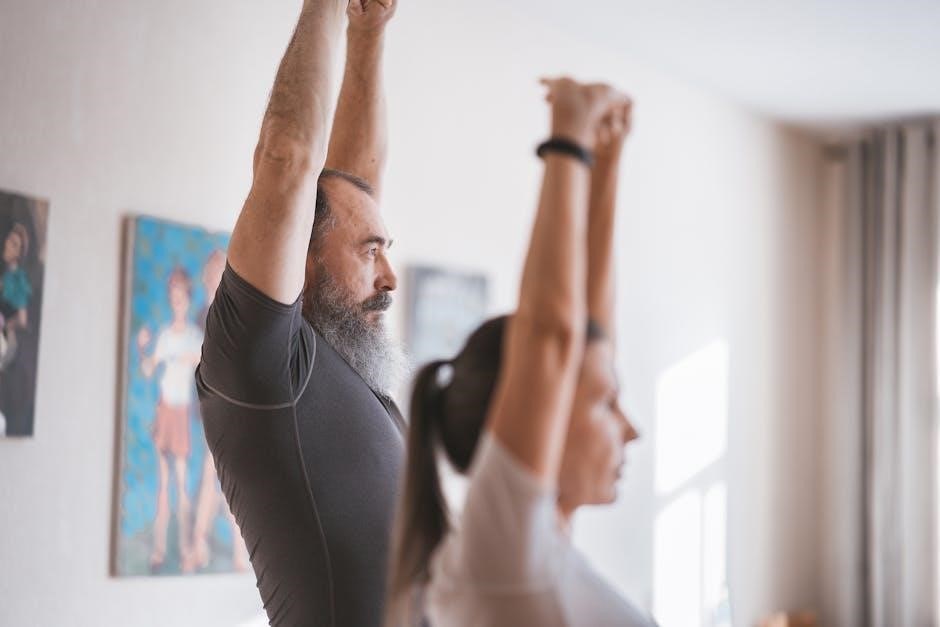
Morning stretch routine PDFs frequently include ankle rotations and foot flexes as foundational exercises performed while still in bed. These simple movements enhance circulation in the lower legs and feet, preparing them for the day ahead. Guides typically recommend rotating each ankle clockwise and counterclockwise, followed by pointing and flexing the feet;
PDF instructions emphasize slow, controlled movements and mindful awareness of any sensations. These exercises are particularly beneficial for individuals experiencing stiffness or discomfort in their ankles or feet, promoting improved mobility and reducing tension.
Gentle Neck Rolls
Many morning stretch routine PDFs incorporate gentle neck rolls as a key component for releasing tension accumulated during sleep. These guides advise performing slow, controlled movements, avoiding any forceful or jerky motions. Typically, instructions detail tilting the ear towards the shoulder on each side, then gently rotating the chin towards the chest.
PDF resources often caution against extending the neck backward, especially for beginners. The focus is on easing stiffness and improving range of motion, promoting relaxation and preparing the neck for daily activities.
Standing Stretches (Next 5 Minutes)
Morning stretch routine PDFs frequently dedicate the latter half of a routine to standing stretches, capitalizing on increased blood flow from initial movements. These guides detail exercises like standing side bends, torso twists, and hamstring stretches, often suggesting holding each stretch for 20-30 seconds.
Many PDFs emphasize proper form to maximize benefits and prevent injury, including keeping the core engaged and breathing deeply. Variations are often provided for different fitness levels, ensuring accessibility for all users. Quadriceps and calf stretches are also commonly included.
Standing Side Bend
Morning stretch routine PDFs consistently feature the standing side bend as a key exercise for improving spinal flexibility and stretching the obliques. Instructions typically advise standing with feet shoulder-width apart, then gently reaching one arm overhead and bending towards the opposite side.
PDF guides often emphasize keeping the hips stable and avoiding overextension. Modifications for beginners include reducing the range of motion, while advanced users may hold a light weight for increased intensity. Proper breathing is also highlighted for optimal results.
Torso Twist
Many morning stretch routine PDFs include the torso twist, emphasizing its benefits for spinal mobility and core engagement. Instructions generally involve standing with feet firmly planted, then gently rotating the upper body from side to side, keeping the hips relatively stable.
PDF guides often suggest keeping the arms relaxed and allowing the twist to come from the torso, not forcing the movement. Beginners are advised to start with smaller twists, while more experienced individuals can increase the range of motion.
Hamstring Stretch (Standing or Seated)
Morning stretch routine PDFs frequently feature hamstring stretches, presented in both standing and seated variations to accommodate different flexibility levels. These guides typically instruct to keep the back straight and hinge at the hips, reaching towards the toes.
PDF resources emphasize avoiding rounded backs and suggest a slight bend in the knees if needed. Holding the stretch for 20-30 seconds is commonly recommended. Some PDFs offer modifications using a towel or strap to assist in reaching the feet, particularly for beginners.
Quadriceps Stretch
Morning stretch routine PDFs consistently include quadriceps stretches, often demonstrated as a standing exercise. Instructions typically involve holding one foot towards the glutes, keeping the knees close together and maintaining an upright posture. Many PDF guides advise using a wall or chair for balance if needed.
These resources emphasize feeling the stretch in the front of the thigh and suggest holding the position for 20-30 seconds per leg. Some PDFs offer variations, like lying prone and performing the stretch, catering to different preferences and flexibility levels.
Calf Stretch
Morning stretch routine PDFs frequently feature calf stretches, often illustrated with a wall or stable surface for support. The typical instruction involves placing hands against a wall, stepping one leg back, and pressing the heel towards the ground while keeping the back leg straight.
These guides emphasize maintaining a slight bend in the front knee and feeling the stretch in the lower leg. Holding the stretch for 20-30 seconds per leg is commonly recommended. Some PDFs suggest variations, like bent-knee calf stretches, targeting different parts of the calf muscle.

Stretches for Specific Muscle Groups
Many morning stretch routine PDFs categorize stretches by muscle group, offering targeted routines for areas like the chest, back, and hip flexors;
Chest and Upper Back Stretches
Morning stretch routine PDFs frequently emphasize chest and upper back stretches to counteract the effects of prolonged sitting or screen time. These stretches help reverse slouching and improve posture. Common exercises detailed in these guides include doorway stretches, where you place forearms on a doorframe and gently lean forward, and clasping hands behind your back and lifting them upwards.
These routines often highlight the importance of mindful alignment during these stretches. Regularly performing these stretches, as outlined in PDF resources, promotes better body awareness and can alleviate tension in the shoulders and neck, contributing to a more comfortable and energized start to the day.

Lower Back Stretches
Many morning stretch routine PDFs dedicate sections to lower back stretches, recognizing the commonality of stiffness and discomfort in this area. These guides often feature exercises like knee-to-chest stretches, performed while lying on your back, and gentle spinal twists. Cat-cow stretches, frequently modified for bed as shown in some PDFs, are also included to improve spinal mobility.
These resources emphasize controlled movements and avoiding overextension. Consistent practice, as detailed in these PDFs, can help alleviate lower back pain, improve posture, and increase flexibility, setting a positive tone for the day ahead.
Hip Flexor Stretches
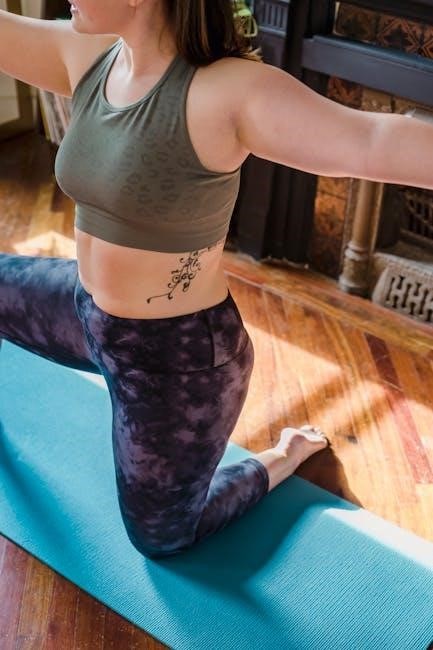
Morning stretch routine PDFs frequently highlight the importance of hip flexor stretches, as these muscles often tighten during sleep. Common exercises detailed in these guides include lunging hip flexor stretches and kneeling hip flexor stretches, emphasizing proper form to avoid strain. Some PDFs suggest modifications for beginners, focusing on a gentle stretch without pushing too far.
These resources explain that releasing tension in the hip flexors can improve posture, reduce lower back pain, and enhance overall mobility. Consistent practice, as outlined in these PDFs, contributes to a more comfortable and energized start to the day.
Modifications and Considerations
Many morning stretch routine PDFs offer modifications for various fitness levels and physical limitations, ensuring accessibility and preventing injuries during practice.
Stretching for Beginners
Morning stretch routine PDFs designed for beginners often emphasize gentle movements and holding stretches for shorter durations. These guides typically include illustrations or videos demonstrating proper form, minimizing the risk of strain. Focus on foundational stretches like knee-to-chest, spinal twists (modified for comfort), and gentle neck rolls.
Beginners should prioritize listening to their bodies, avoiding any pain, and gradually increasing the intensity and duration of stretches over time. Many PDFs suggest starting with just 5-10 minutes, building up as flexibility improves. Remember consistency is key, even short daily routines yield significant benefits.
Stretching for Women Over 50
Morning stretch routine PDFs tailored for women over 50 often prioritize joint health and address age-related stiffness. These guides frequently include modifications for common concerns like arthritis or decreased range of motion. Gentle stretches focusing on hips, lower back, and shoulders are commonly featured, promoting mobility and reducing discomfort.
Many PDFs emphasize the importance of warm-up exercises before stretching and suggest holding stretches for longer durations to improve flexibility. Prioritizing proper form and listening to the body’s signals are crucial, alongside incorporating mindful breathing techniques for enhanced relaxation.
Listening to Your Body and Avoiding Pain
Morning stretch routine PDFs consistently stress the importance of mindful movement and respecting your body’s limits. A good PDF guide will emphasize differentiating between a comfortable stretch and pain. Never force a stretch; instead, gently ease into each position, stopping immediately if you feel any sharp or intense discomfort.
These resources often advise beginners to start with shorter hold times and smaller ranges of motion, gradually increasing intensity as flexibility improves. Paying attention to bodily signals prevents injuries and ensures a safe, effective stretching experience, promoting long-term well-being.

Creating a Personalized Routine
Many morning stretch routine PDFs encourage customization, suggesting incorporating yoga poses or tailoring stretches to address individual needs and preferences.
Incorporating Yoga Poses
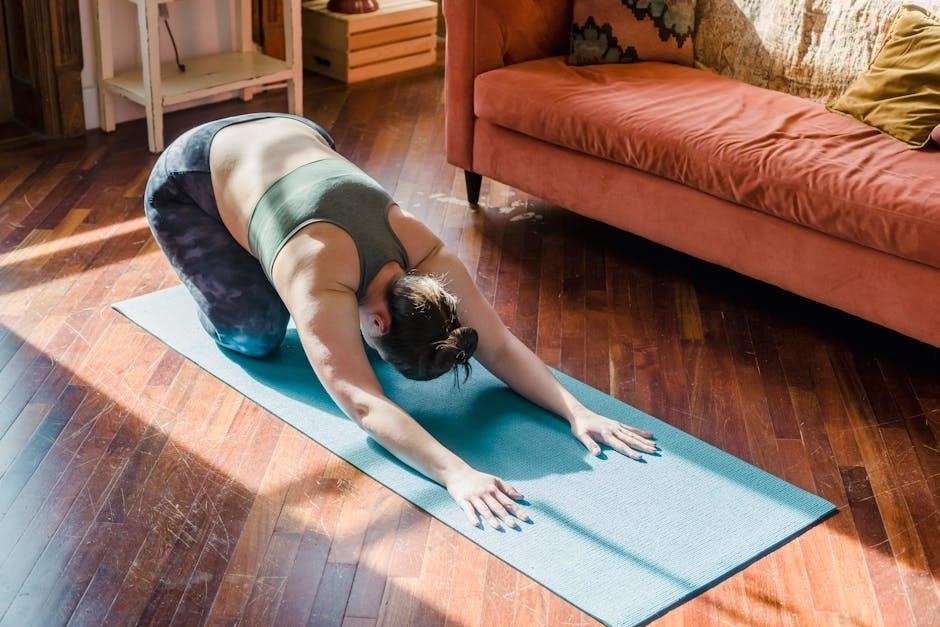
Many morning stretch routine PDFs suggest seamlessly blending yoga poses for a more holistic start to the day. Simple poses like Downward-Facing Dog, Child’s Pose, and gentle twists can significantly enhance flexibility and promote relaxation. These PDF guides often illustrate modifications for various fitness levels, ensuring accessibility for beginners.
Integrating yoga not only improves physical well-being but also cultivates mindfulness. A PDF might detail how to link breath with movement, deepening the benefits of each pose. Consider using a PDF resource to learn proper alignment and avoid injury while exploring these beneficial additions to your routine.
Using a Morning Stretch Routine PDF
A morning stretch routine PDF offers a convenient, portable guide to jumpstart your day. These resources often categorize stretches by muscle group or difficulty, allowing for personalized routines. Many PDFs include visual aids, demonstrating proper form and technique, crucial for preventing injuries.
Downloading a PDF enables offline access, perfect for travel or areas with limited internet. Look for PDFs that offer routines of varying lengths – from quick 5-minute sessions to more comprehensive 15-minute flows. Utilizing a PDF promotes consistency and helps establish a sustainable stretching habit.
Resources and Further Information
Numerous online resources and morning stretch routine PDF guides are available, offering detailed instructions and visual demonstrations for various stretching exercises.
Recommended PDF Guides
Several downloadable PDF guides offer structured morning stretch routines for all fitness levels. These resources often categorize stretches by muscle group, providing clear illustrations and step-by-step instructions. Many guides emphasize modifications for beginners and those with limited mobility, ensuring accessibility. Look for PDFs that detail hold times and breathing techniques to maximize benefits.
Some popular options include guides focusing on flexibility for women over 50, routines designed for quick implementation (under 10 minutes), and comprehensive yoga-inspired stretching sequences. Utilizing a PDF allows for offline access and convenient printing, making it easy to follow along each morning and build a consistent habit.
Online Video Tutorials
Complementing morning stretch routine PDF guides, numerous online video tutorials provide dynamic demonstrations of each exercise. Platforms like YouTube host a wealth of content, featuring certified personal trainers guiding viewers through various routines; These videos are particularly helpful for understanding proper form and technique, minimizing the risk of injury.
Search for tutorials specifically tailored to your needs – beginner-friendly options, routines for specific muscle groups, or those focusing on increased energy levels. Many videos align with the exercises found in popular PDF guides, offering a visual aid to enhance your practice and ensure correct execution.